
Bake up a batch of delicious homemade sourdough bagels with this easy recipe, perfect for a chewy and golden breakfast or snack.
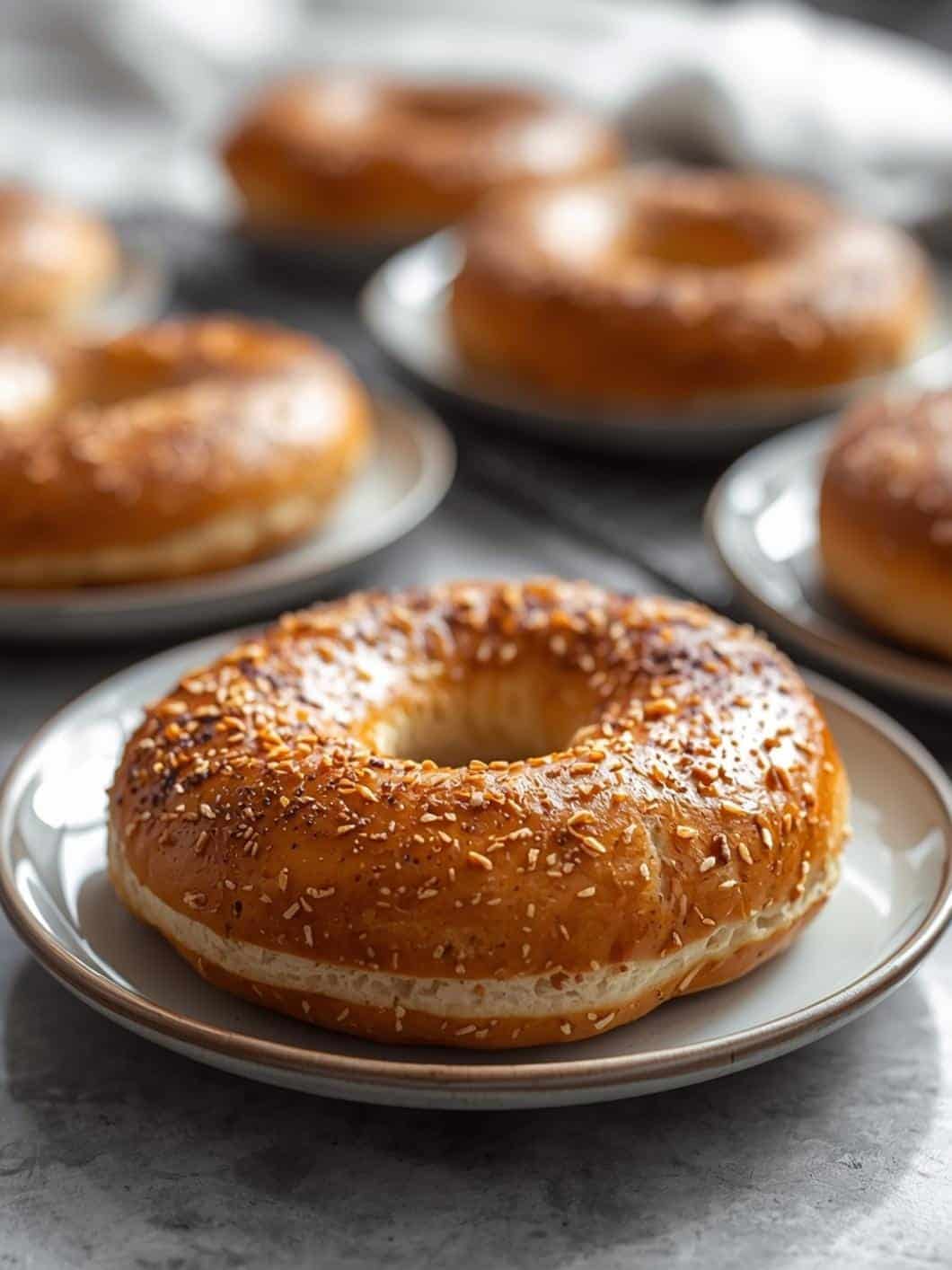
This simple sourdough bagel recipe uses active starter for the best results, delivering that classic bagel texture and flavor right in your own kitchen.
Discover the details on how to create these satisfying bagels, from mixing the dough to achieving that perfect golden crust. Whether you’re an experienced sourdough baker or just starting out, this recipe provides clear steps for a rewarding baking experience.
Table of Contents
- What You’ll Love About This Quick And Easy Recipe
- Everything You Need To Make This Recipe Without Stress
- Time Needed From Start To Finish
- How To Make It Step By Step With Visual Cues
- Easy Variations And Serving Ideas That Fit Real Life
- Common Slip-Ups And How To Avoid Them
- How To Store It And Make It Ahead Without Ruining Texture
- Questions People Always Ask Before Making This Recipe

Homemade Sourdough Bagels
- Total Time: 12-16 hours
- Yield: 8 bagels 1x
Description
Bake up a batch of delicious homemade sourdough bagels with this easy recipe, perfect for a chewy and golden breakfast or snack. This simple sourdough bagel recipe uses active starter for the best results, delivering that classic bagel texture and flavor right in your own kitchen.
Ingredients
Instructions
1. Mix the Dough: In a large mixing bowl, combine the active sourdough starter, warm water, sugar, and salt. Stir until the starter is mostly dissolved. Gradually add the bread flour, mixing with a wooden spoon or your hands until a shaggy dough forms.
2. Knead the Dough: Turn the dough out onto a lightly floured surface. Knead for 8-10 minutes until the dough is smooth and elastic. It should pass the windowpane test (stretch a small piece thin enough to see light through it without tearing). Place the dough back into a lightly oiled bowl, cover, and let it bulk ferment at room temperature for 3-4 hours, or until it has visibly increased in size.
3. Shape the Bagels: Gently deflate the dough and divide it into 8 equal pieces (about 110-120 grams each). Roll each piece into a smooth ball. To create the hole, poke a hole in the center of each ball with your thumb and gently stretch the dough into a ring, aiming for a consistent thickness. Place the shaped bagels on a parchment-lined baking sheet, cover loosely with plastic wrap, and refrigerate for 8-12 hours (overnight). This cold proof develops flavor and makes them easier to handle.
4. Prepare for Baking: Preheat your oven to 425 F (220 C) with a baking stone or inverted baking sheet inside. Bring a large pot of water to a rolling boil and add the baking soda.
5. Boil the Bagels: Carefully drop 2-3 bagels into the boiling water, making sure not to overcrowd the pot. Boil for 30-60 seconds per side. The longer they boil, the chewier the final texture will be. Use a slotted spoon to remove the bagels and place them back on the parchment-lined baking sheet.
6. Add Toppings and Bake: If desired, sprinkle your chosen toppings onto the wet bagels immediately after boiling. Transfer the baking sheet to the preheated oven. Bake for 18-25 minutes, or until the bagels are deeply golden brown and sound hollow when tapped on the bottom.
7. Cool and Serve: Allow the bagels to cool completely on a wire rack before slicing and serving. This helps the internal structure set and prevents a gummy texture.
- Prep Time: 20 minutes
- Cook Time: 25-30 minutes
- Category: breakfast
- Method: baking
- Cuisine: american
Nutrition
- Serving Size: 1 bagel
Keywords: sourdough, bagels, breakfast, baking, homemade, chewy, golden, starter, bread, snack
What You’ll Love About This Quick And Easy Recipe
This recipe is a game-changer for anyone who loves the taste of fresh bagels but wants the satisfaction of making them at home. It’s perfect for families looking for a weekend baking project or individuals who appreciate the unique tang and chew that only sourdough can provide. You’ll love how straightforward the process is, especially considering the impressive results. These bagels are fantastic for a hearty breakfast, a satisfying lunch sandwich, or even a quick snack with your favorite spread. The active sourdough starter not only adds incredible flavor but also contributes to that signature chewy texture, making these a standout from store-bought options.
Everything You Need To Make This Recipe Without Stress
Gathering your ingredients before you start baking makes the entire process smoother and more enjoyable. This recipe uses common pantry staples alongside your active sourdough starter, ensuring you won’t need to hunt for obscure items.
INGREDIENTS:
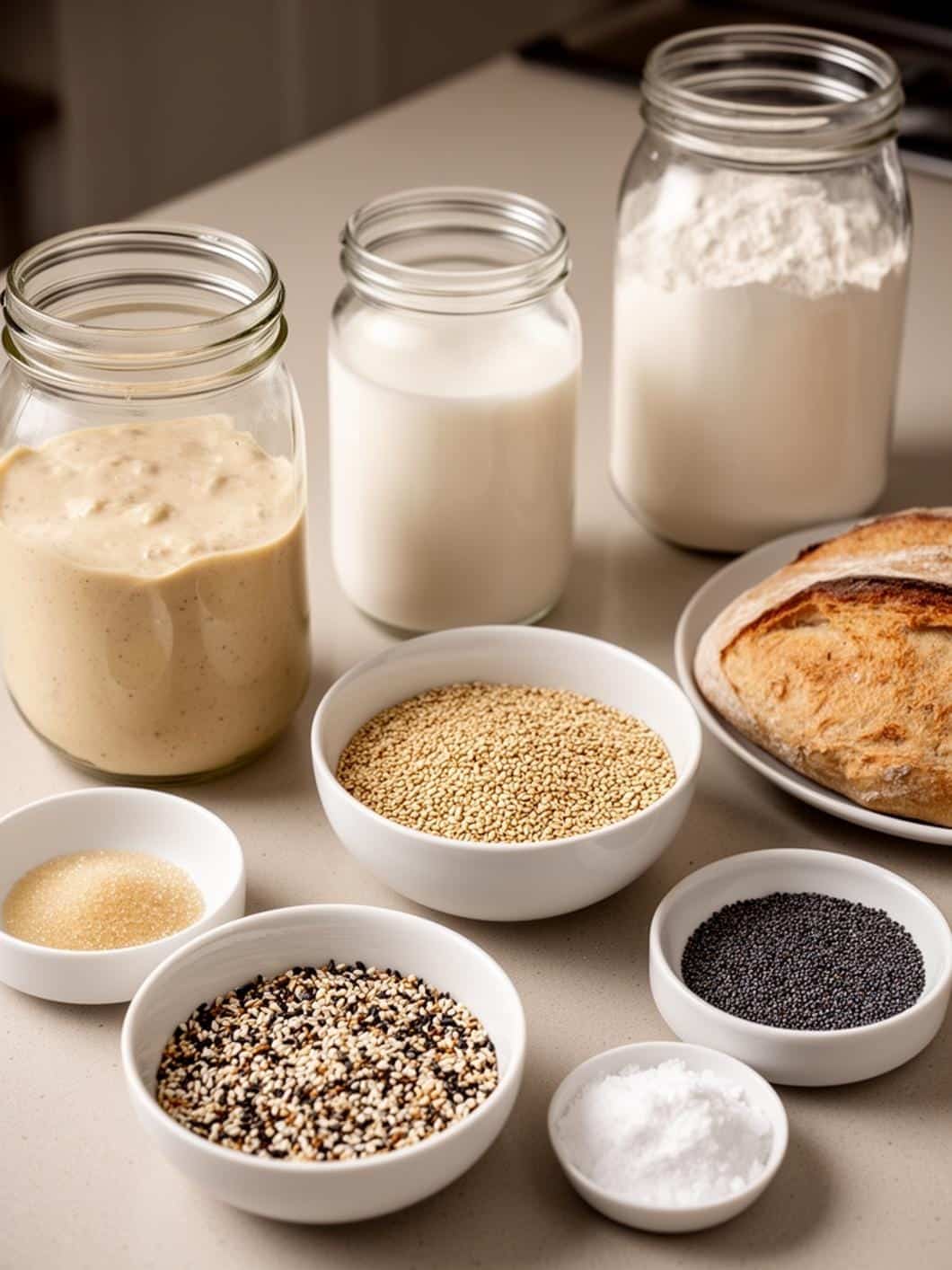
- 150 grams active sourdough starter (fed 4-12 hours prior)
- 300 grams warm water (about 95-105°F)
- 10 grams granulated sugar
- 10 grams salt
- 500 grams bread flour
- 1 tablespoon baking soda (for boiling water)
- Optional toppings: sesame seeds, poppy seeds, everything bagel seasoning, coarse salt
For the bread flour, using a high-protein variety is recommended as it contributes to the chewy texture characteristic of good bagels. If you don’t have bread flour, all-purpose flour can be used, but the texture might be slightly less chewy. The granulated sugar helps feed the yeast in the starter and contributes to browning, but it can be omitted if you prefer a less sweet dough. For the toppings, feel free to get creative! Any of your favorite bagel toppings will work wonderfully here.
Time Needed From Start To Finish
While sourdough baking often implies long waits, this recipe is designed to be manageable within a reasonable timeframe, especially for an overnight proof.
- Prep Time: 20 minutes (for mixing and initial shaping)
- Bulk Fermentation: 3-4 hours (at room temperature)
- Cold Fermentation (Proofing): 8-12 hours (overnight in the refrigerator)
- Boiling & Baking Time: 25-30 minutes
- Total Active Time: Approximately 45-50 minutes
- Overall Time (including fermentation): Approximately 12-16 hours (mostly hands-off)
How To Make It Step By Step With Visual Cues
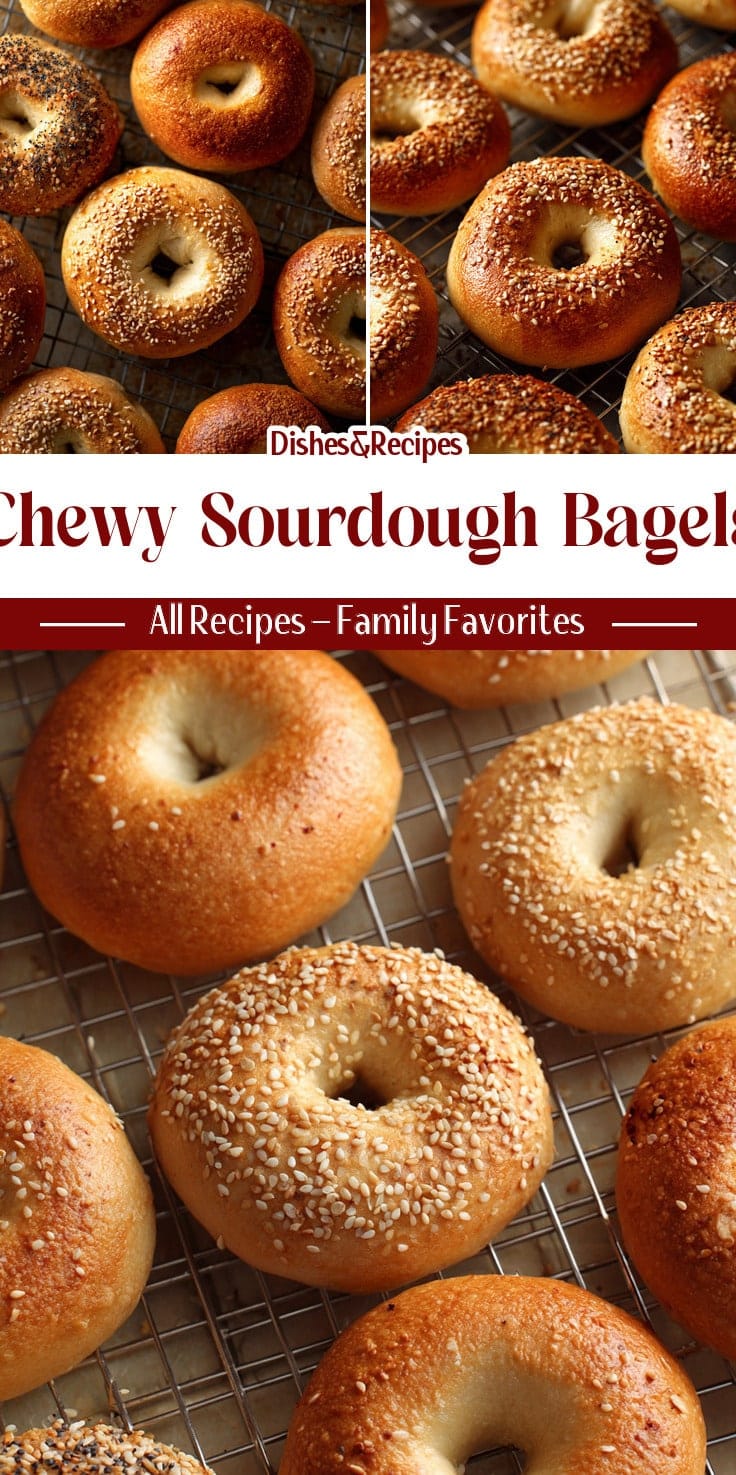
Creating these chewy sourdough bagels is a rewarding process. Follow these steps for golden, delicious results.
- Mix the Dough: In a large mixing bowl, combine the active sourdough starter, warm water, sugar, and salt. Stir until the starter is mostly dissolved. Gradually add the bread flour, mixing with a wooden spoon or your hands until a shaggy dough forms.
- Knead the Dough: Turn the dough out onto a lightly floured surface. Knead for 8-10 minutes until the dough is smooth and elastic. It should pass the windowpane test (stretch a small piece thin enough to see light through it without tearing). Place the dough back into a lightly oiled bowl, cover, and let it bulk ferment at room temperature for 3-4 hours, or until it has visibly increased in size.
- Shape the Bagels: Gently deflate the dough and divide it into 8 equal pieces (about 110-120 grams each). Roll each piece into a smooth ball. To create the hole, poke a hole in the center of each ball with your thumb and gently stretch the dough into a ring, aiming for a consistent thickness. Place the shaped bagels on a parchment-lined baking sheet, cover loosely with plastic wrap, and refrigerate for 8-12 hours (overnight). This cold proof develops flavor and makes them easier to handle.
- Prepare for Baking: Preheat your oven to 425°F (220°C) with a baking stone or inverted baking sheet inside. Bring a large pot of water to a rolling boil and add the baking soda.
- Boil the Bagels: Carefully drop 2-3 bagels into the boiling water, making sure not to overcrowd the pot. Boil for 30-60 seconds per side. The longer they boil, the chewier the final texture will be. Use a slotted spoon to remove the bagels and place them back on the parchment-lined baking sheet.
- Add Toppings and Bake: If desired, sprinkle your chosen toppings onto the wet bagels immediately after boiling. Transfer the baking sheet to the preheated oven. Bake for 18-25 minutes, or until the bagels are deeply golden brown and sound hollow when tapped on the bottom.
- Cool and Serve: Allow the bagels to cool completely on a wire rack before slicing and serving. This helps the internal structure set and prevents a gummy texture.
Easy Variations And Serving Ideas That Fit Real Life
These homemade sourdough bagels are incredibly versatile and can be customized to suit any taste or occasion. For a classic approach, serve them simply toasted with cream cheese, butter, or jam. For a heartier meal, they make an excellent base for breakfast sandwiches with eggs, cheese, and bacon, or lunch sandwiches filled with deli meats and fresh vegetables.
To make them kid-friendly, offer a variety of sweet spreads like Nutella or fruit preserves, or let them choose their own toppings before baking, such as a sprinkle of cinnamon sugar. You can also make smaller “mini bagels” by dividing the dough into more pieces, which are perfect for little hands. For a party or buffet, arrange a bagel bar with various cream cheeses (plain, chive, strawberry), smoked salmon, capers, and sliced red onion. Other delicious variations include adding dried cranberries and orange zest to the dough for a sweet bagel, or incorporating roasted garlic and herbs for a savory option.
Common Slip-Ups And How To Avoid Them
Even experienced bakers can encounter small challenges, but knowing what to watch out for can ensure your sourdough bagels turn out perfectly every time.
One common mistake is using an inactive sourdough starter. Make sure your starter is bubbly and active, having been fed 4-12 hours before you begin, otherwise, your bagels won’t rise properly. Another slip-up is not kneading the dough enough; under-kneaded dough will result in dense, tough bagels. Knead until the dough is smooth and elastic, which is crucial for that desirable chewy texture. Over-boiling the bagels can lead to a very tough crust, while under-boiling might result in a less chewy interior. Aim for 30-60 seconds per side for a good balance. Finally, don’t overcrowd the boiling pot or the baking sheet. Give the bagels space to expand and brown evenly. If your bagels stick to the parchment, a light spray of cooking oil on the parchment before placing the shaped bagels can help prevent this.
How To Store It And Make It Ahead Without Ruining Texture
Proper storage is key to enjoying your homemade sourdough bagels for days. Once completely cooled, store them in an airtight container or a large zip-top bag at room temperature for up to 2-3 days. For longer storage, bagels freeze beautifully. Slice them first (if desired) and then place them in a freezer-safe bag, removing as much air as possible. They will keep well in the freezer for up to 3 months.
To enjoy frozen bagels, simply pop a slice directly into the toaster, or let a whole bagel thaw at room temperature before toasting or warming in the oven. For making ahead, the cold fermentation step is your best friend. You can shape the bagels and refrigerate them overnight, or even for up to 24-36 hours, which allows you to bake fresh bagels in the morning without much fuss. Just take them straight from the fridge to the boiling water.
Questions People Always Ask Before Making This Recipe
Can I use sourdough discard instead of active starter?
While discard can be used for flavor, active starter is crucial for the rise and texture of these bagels. For best results, use a starter that has been fed and is bubbly and active.Why do I need to boil the bagels?
Boiling the bagels in a baking soda solution is what gives them their signature chewy crust and glossy finish. The baking soda helps to gelatinize the starch on the surface, creating that perfect bagel exterior.My bagels aren’t very chewy, what went wrong?
Lack of chewiness can be due to not enough kneading, using all-purpose flour instead of bread flour, or not boiling them long enough. Ensure you knead thoroughly and boil for at least 30-60 seconds per side.Can I make these bagels without an overnight proof?
While the overnight cold proof enhances flavor and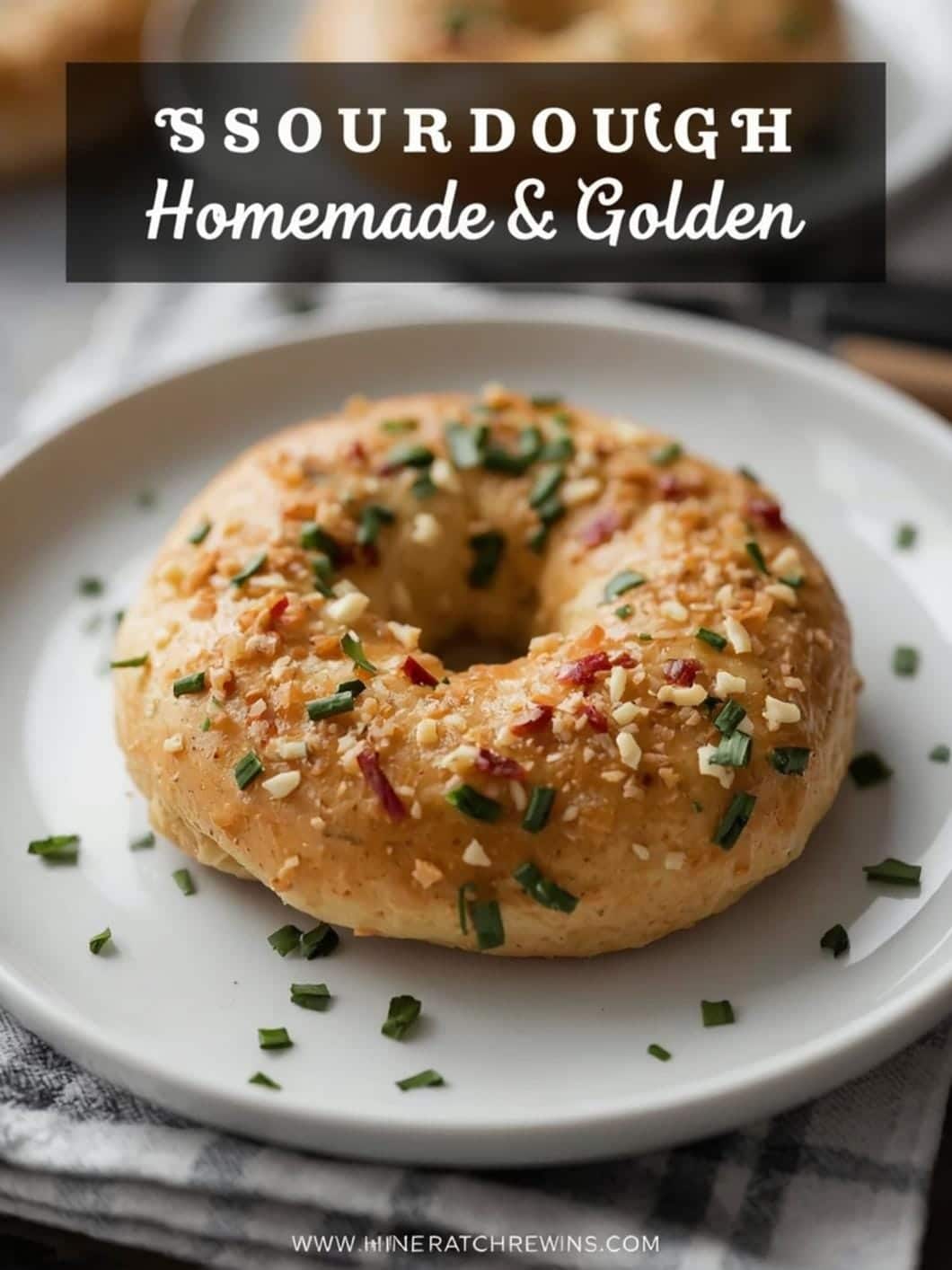
FAQs
- Can I make these ahead? Yes—prep ahead, refrigerate, then serve when ready.
- How long do leftovers last? Store covered in the fridge for 3–4 days for best texture.
- Can I adjust sweetness? Yes—add more or less sweetener to taste.
- Can I change the fruit? Yes—swap strawberries for blueberries, raspberries, or sliced banana.