

Crafting the perfect homemade pizza is a culinary delight, and with this sourdough pizza dough recipe, you’re in for a treat.

This recipe promises a wonderfully crispy crust paired with a satisfyingly chewy inside, making it an ideal choice for your next family meal or gathering.
Whether you’re dreaming of a hearty deep-dish sourdough pizza or a flavorful sourdough focaccia pizza, this versatile dough is your secret weapon. It’s designed to deliver that authentic pizzeria experience right in your own kitchen, with the added depth of flavor that only sourdough can provide.
Table of Contents
- What You’ll Love About This Quick And Easy Recipe
- Everything You Need To Make This Recipe Without Stress
- Time Needed From Start To Finish
- How To Make It Step By Step With Visual Cues
- Easy Variations And Serving Ideas That Fit Real Life
- Common Slip-Ups And How To Avoid Them
- How To Store It And Make It Ahead Without Ruining Texture

Sourdough Pizza Dough
- Total Time: 13-50 hours
- Yield: 2-3 pizzas 1x
Description
This sourdough pizza dough recipe creates a wonderfully crispy crust with a chewy interior, perfect for homemade pizzas, focaccia, calzones, or strombolis. It uses an active sourdough starter to develop complex flavors and a unique texture, making it a versatile base for various culinary creations.
Ingredients
Instructions
1. Combine Starter and Water: In a large mixing bowl, gently whisk together the active sourdough starter and warm water until the starter is mostly dissolved. This creates the foundation for your dough’s fermentation.
2. Add Flour and Salt: Add the bread flour and fine sea salt to the starter mixture. Mix with a wooden spoon or your hands until a shaggy dough forms and no dry spots of flour remain. It will be sticky at this stage.
3. Rest (Autolyse): Cover the bowl with a clean kitchen towel or plastic wrap and let the dough rest for 30 minutes. This “autolyse” step allows the flour to fully hydrate, making the dough easier to work with and improving its texture.
4. Incorporate Olive Oil and Knead: After resting, pour the olive oil over the dough. Gently fold and knead the dough in the bowl for about 5-7 minutes, until the oil is fully incorporated and the dough starts to become smoother and more elastic. You can use a series of “stretch and fold” motions, pulling the dough from one side, stretching it up, and folding it over itself, rotating the bowl as you go.
5. Bulk Fermentation with Folds: Cover the bowl again. Over the next 4-8 hours (depending on the warmth of your kitchen), perform a series of “stretch and folds” every 30-60 minutes for the first 2-3 hours. To do this, lightly wet your hands, grab a portion of the dough from the edge, stretch it upwards, and fold it over the center. Rotate the bowl and repeat 3-4 times. This builds strength in the dough. The dough should double in size and become bubbly.
6. Cold Fermentation (Optional but Recommended): Once the bulk fermentation is complete, gently transfer the dough to a lightly oiled container or bowl, cover it tightly, and refrigerate for 12-48 hours. This slow, cold fermentation develops deeper flavors and makes the dough easier to handle.
7. Shape and Bake: When ready to bake, remove the dough from the refrigerator at least 1-2 hours before shaping to allow it to come to room temperature. Gently divide the dough into desired portions (usually 2-3 pizzas). On a lightly floured surface, gently stretch or roll out each portion into your desired pizza shape. Top with your favorite ingredients and bake in a preheated oven (as hot as your oven can go, ideally 475-550F or 245-290C) on a pizza stone or steel for 10-15 minutes, until the crust is golden brown and the cheese is bubbly.
- Prep Time: 15 minutes
- Cook Time: 10-15 minutes
- Category: main dish
- Method: baking
- Cuisine: italian
Nutrition
- Serving Size: 1 pizza
Keywords: sourdough, pizza, dough, homemade, baking, crispy, chewy, italian, bread
What You’ll Love About This Quick And Easy Recipe
This sourdough pizza dough recipe is a game-changer for anyone looking to elevate their homemade pizza nights. It’s perfect for busy parents, budding home bakers, or anyone who appreciates the rich, tangy flavor and satisfying texture that sourdough brings to the table. The beauty of this recipe lies in its ability to produce a crust that is both incredibly crispy on the outside and delightfully chewy on the inside, a combination that’s often hard to achieve. It works because the sourdough starter not only leavens the dough but also develops complex flavors and a unique texture that commercial yeast alone can’t replicate. You can serve this dough for casual weeknight dinners, weekend pizza parties, or even as a base for an impressive appetizer like sourdough focaccia. It’s a recipe that brings joy and deliciousness to any occasion.
Everything You Need To Make This Recipe Without Stress
Gathering your ingredients before you begin ensures a smooth and enjoyable cooking process. This recipe uses common pantry staples, making it accessible for most home cooks.
INGREDIENTS:
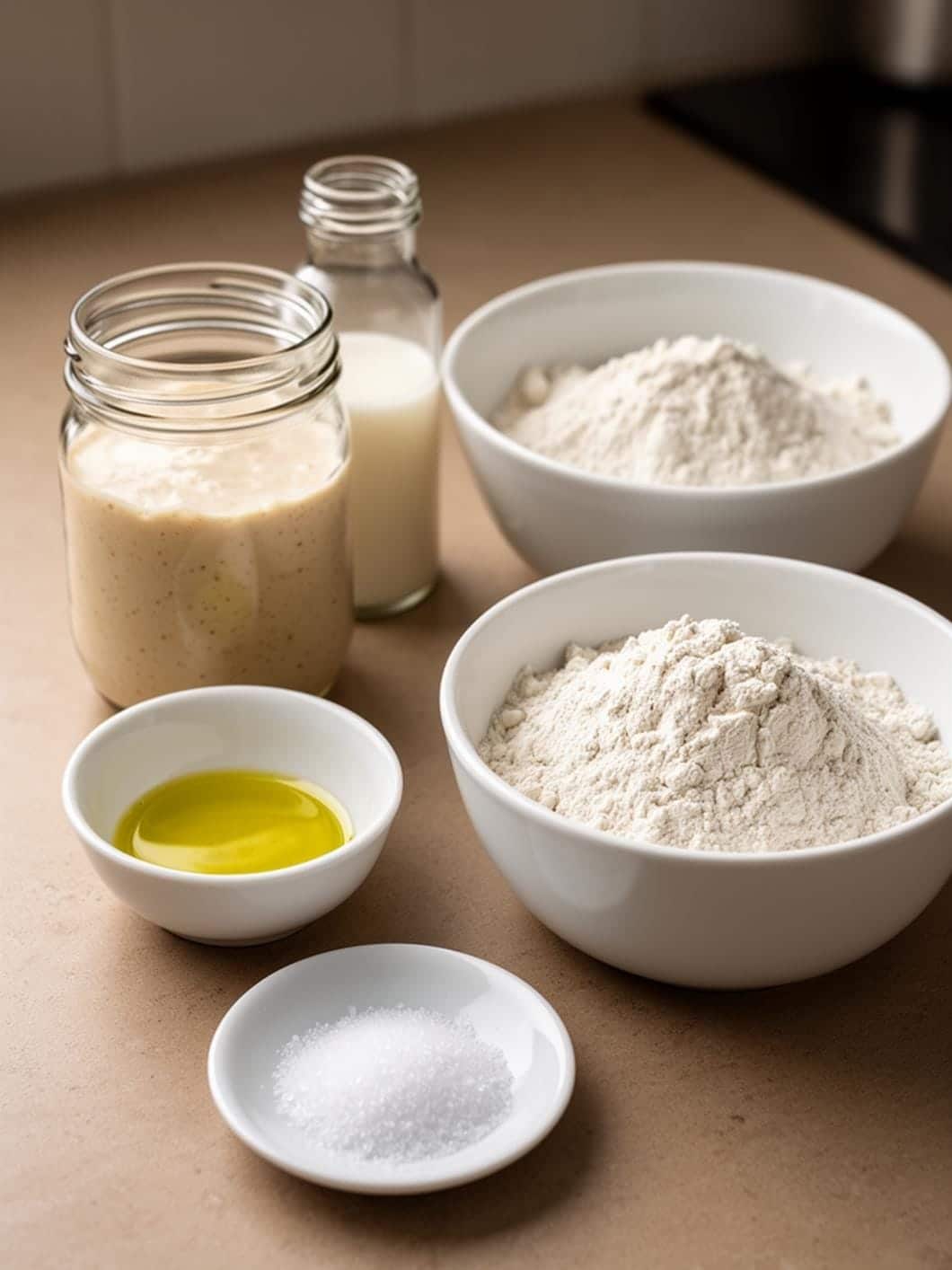
- 150 grams active sourdough starter (fed and bubbly)
- 300 grams warm water (around 90-100°F or 32-38°C)
- 500 grams bread flour (or all-purpose flour)
- 10 grams fine sea salt
- 10 grams olive oil, plus more for greasing the bowl
For the flour, while bread flour is recommended for its higher protein content which contributes to chewiness, all-purpose flour can certainly be used in a pinch. Just be aware that the texture might be slightly less chewy. When it comes to salt, fine sea salt is preferred for its even distribution and clean taste, but kosher salt will also work well. Ensure your sourdough starter is active and bubbly; this is crucial for the dough’s rise and flavor. If your starter isn’t quite ready, give it a few hours after feeding to become fully active.
Time Needed From Start To Finish
The beauty of sourdough pizza dough is that much of the work is hands-off, allowing the starter to do its magic.
- Prep time: 15 minutes (active mixing)
- Bulk Fermentation: 4-8 hours (hands-off, depending on ambient temperature)
- Cold Fermentation (optional but recommended): 12-48 hours
- Shaping and Resting: 30 minutes
- Cook time: 10-15 minutes (per pizza, depending on oven and toppings)
- Total Time: Approximately 13-50 hours (mostly hands-off, allowing for fermentation)
While the total time might seem long due to fermentation, the actual hands-on time is minimal, making it a perfect project to start a day or two before you plan to bake your pizza.
How To Make It Step By Step With Visual Cues

Creating this sourdough pizza dough is a rewarding process. Follow these steps for a perfect crispy and chewy crust.
- Combine Starter and Water: In a large mixing bowl, gently whisk together the active sourdough starter and warm water until the starter is mostly dissolved. This creates the foundation for your dough’s fermentation.
- Add Flour and Salt: Add the bread flour and fine sea salt to the starter mixture. Mix with a wooden spoon or your hands until a shaggy dough forms and no dry spots of flour remain. It will be sticky at this stage.
- Rest (Autolyse): Cover the bowl with a clean kitchen towel or plastic wrap and let the dough rest for 30 minutes. This “autolyse” step allows the flour to fully hydrate, making the dough easier to work with and improving its texture.
- Incorporate Olive Oil and Knead: After resting, pour the olive oil over the dough. Gently fold and knead the dough in the bowl for about 5-7 minutes, until the oil is fully incorporated and the dough starts to become smoother and more elastic. You can use a series of “stretch and fold” motions, pulling the dough from one side, stretching it up, and folding it over itself, rotating the bowl as you go.
- Bulk Fermentation with Folds: Cover the bowl again. Over the next 4-8 hours (depending on the warmth of your kitchen), perform a series of “stretch and folds” every 30-60 minutes for the first 2-3 hours. To do this, lightly wet your hands, grab a portion of the dough from the edge, stretch it upwards, and fold it over the center. Rotate the bowl and repeat 3-4 times. This builds strength in the dough. The dough should double in size and become bubbly.
- Cold Fermentation (Optional but Recommended): Once the bulk fermentation is complete, gently transfer the dough to a lightly oiled container or bowl, cover it tightly, and refrigerate for 12-48 hours. This slow, cold fermentation develops deeper flavors and makes the dough easier to handle.
- Shape and Bake: When ready to bake, remove the dough from the refrigerator at least 1-2 hours before shaping to allow it to come to room temperature. Gently divide the dough into desired portions (usually 2-3 pizzas). On a lightly floured surface, gently stretch or roll out each portion into your desired pizza shape. Top with your favorite ingredients and bake in a preheated oven (as hot as your oven can go, ideally 475-550°F or 245-290°C) on a pizza stone or steel for 10-15 minutes, until the crust is golden brown and the cheese is bubbly.
Easy Variations And Serving Ideas That Fit Real Life
This sourdough pizza dough is incredibly versatile, lending itself to a multitude of creative culinary adventures. For a kid-friendly option, keep toppings simple with classic marinara and mozzarella, perhaps cut into fun shapes with cookie cutters after baking. For a delicious sourdough focaccia pizza, press the dough into an oiled sheet pan, dimple it with your fingertips, drizzle with more olive oil, sprinkle with flaky sea salt and fresh rosemary, and bake until golden. You can also use this dough for calzones, strombolis, or even savory stuffed bread.
Consider serving your pizza with a fresh green salad with a light vinaigrette to cut through the richness. For dipping, a simple olive oil infused with garlic and red pepper flakes is always a hit. Don’t be afraid to experiment with different cheese blends, from sharp provolone to creamy burrata, or add a sprinkle of fresh herbs like basil or oregano after baking for a burst of flavor. This dough is also robust enough to handle heavier toppings, making it perfect for a “meat lover’s” or “veggie supreme” pizza.
Common Slip-Ups And How To Avoid Them
Even experienced bakers can encounter challenges, but many common issues with sourdough pizza dough are easily fixed. One frequent mistake is using an inactive sourdough starter. If your starter isn’t bubbly and active, your dough won’t rise properly, leading to a dense crust. Always feed your starter 4-12 hours before you plan to mix your dough and ensure it’s at its peak activity. Another common error is over-flouring the surface when shaping. Too much flour can make the dough tough and dry. Use just enough flour to prevent sticking.
Forgetting to allow the dough to come to room temperature before shaping can also cause problems. Cold dough is stiff and difficult to stretch, leading to tears. Give it at least an hour out of the fridge. Lastly, not preheating your oven and pizza stone/steel adequately can result in a soggy bottom crust. A super hot oven and a well-heated baking surface are crucial for achieving that desirable crispy base. Give your oven at least 30-60 minutes to preheat fully.
How To Store It And Make It Ahead Without Ruining Texture
One of the best features of this sourdough pizza dough is its make-ahead potential. After the bulk fermentation, the dough can be stored in the refrigerator for 2-3 days. Place it in an airtight container lightly oiled to prevent sticking and cover it tightly. The cold fermentation will continue to develop flavor and improve the dough’s texture.
If you want to freeze the dough, after bulk fermentation and before cold fermentation, divide the dough into individual pizza portions. Lightly oil each portion, wrap it tightly in plastic wrap, and then place it in a freezer-safe bag. It can be frozen for up to 1 month. When you’re ready to use it, transfer the frozen dough to the refrigerator the night before to thaw, then let it come to room temperature for 1-2 hours before shaping and baking. This method ensures you always have delicious sourdough pizza dough ready for a spontaneous pizza night without

FAQs
- Can I make these ahead? Yes—prep ahead, refrigerate, then serve when ready.
- How long do leftovers last? Store covered in the fridge for 3–4 days for best texture.
- Can I adjust sweetness? Yes—add more or less sweetener to taste.
- Can I change the fruit? Yes—swap strawberries for blueberries, raspberries, or sliced banana.